UlukaleVillage Archive
Home · Ulukale Mulberry
Geographically Indicated · Organic

Ulukale Mulberry

An endemic, seedless mulberry that dries on the branch and yields neither the same colour nor the same aroma once it leaves the valley. The village's main livelihood and, today, a registered value exported around the world.

400–500
tonnes annual yield
225
producer families (Ulukale + Bozağaç)
500–1,000
year-old mulberry trees
~40
day harvest marathon
Endemic to the Valley

A taste of one place

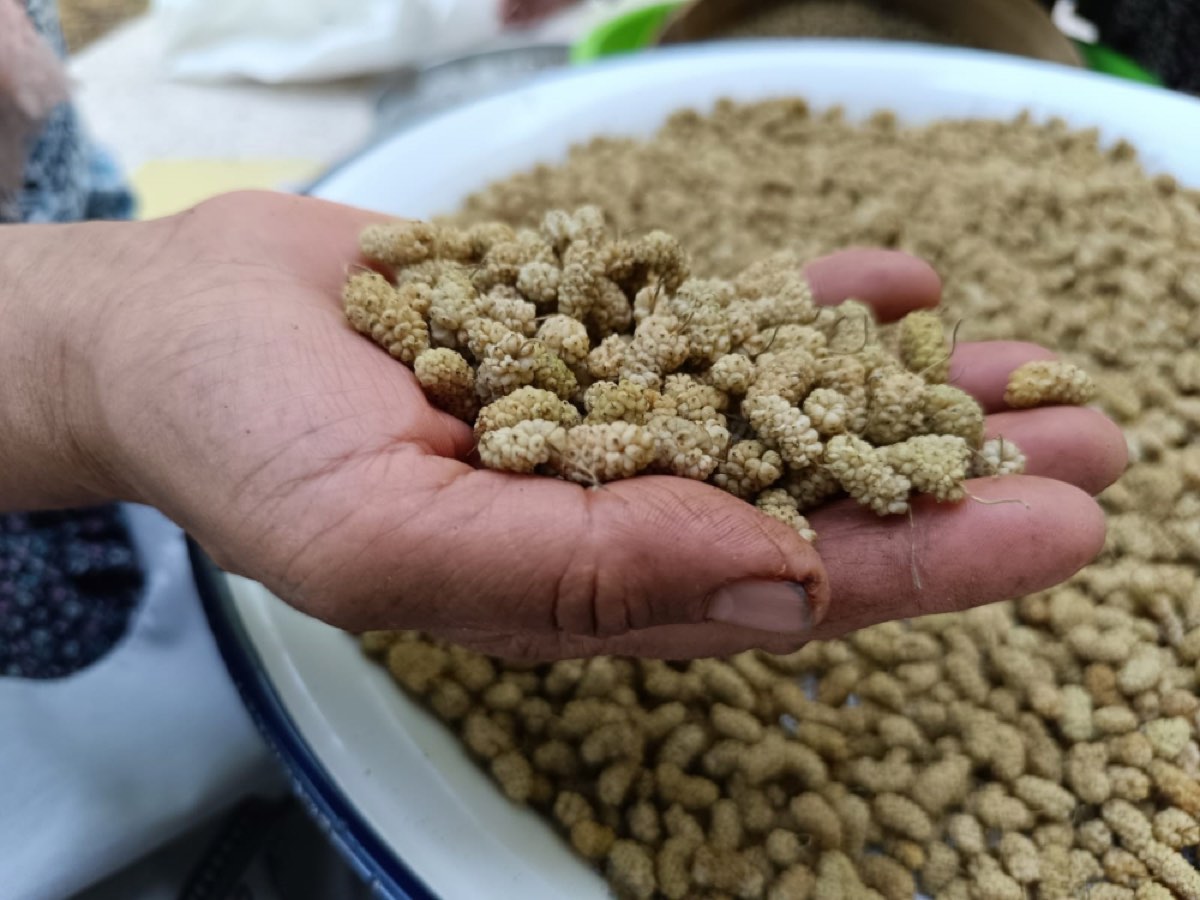
The Ulukale mulberry is considered an endemic fruit, particular to its valley: planted outside that valley, it never yields the same colour or aroma. Some of the mulberry trees in the village are estimated to be 500 to 1,000 years old — meaning these orchards have continued in the same soil for centuries. The fruit is seedless; a good Ulukale mulberry is not dark but white to golden-yellow.

It grows in a mountainous, harsh continental climate. It dislikes rain and humidity and owes its drying to the sun — so much so that a single drop of rain during drying will darken its colour and lower its quality. This delicate balance makes the mulberry both difficult and unique.

Drying on the Branch

The fruit of patience

The Ulukale mulberry is grown for drying, not fresh eating. It owes its unique flavour to the natural drying process.

Step 1

Drying on the branch

The mulberries ripen and dry on the branch; when ready, they fall on their own.

Step 2

Gathering

Sheets, tarpaulins or nets are spread under the trees; the fallen fruit is gathered with brooms and blowers.

Step 3

Sun-drying

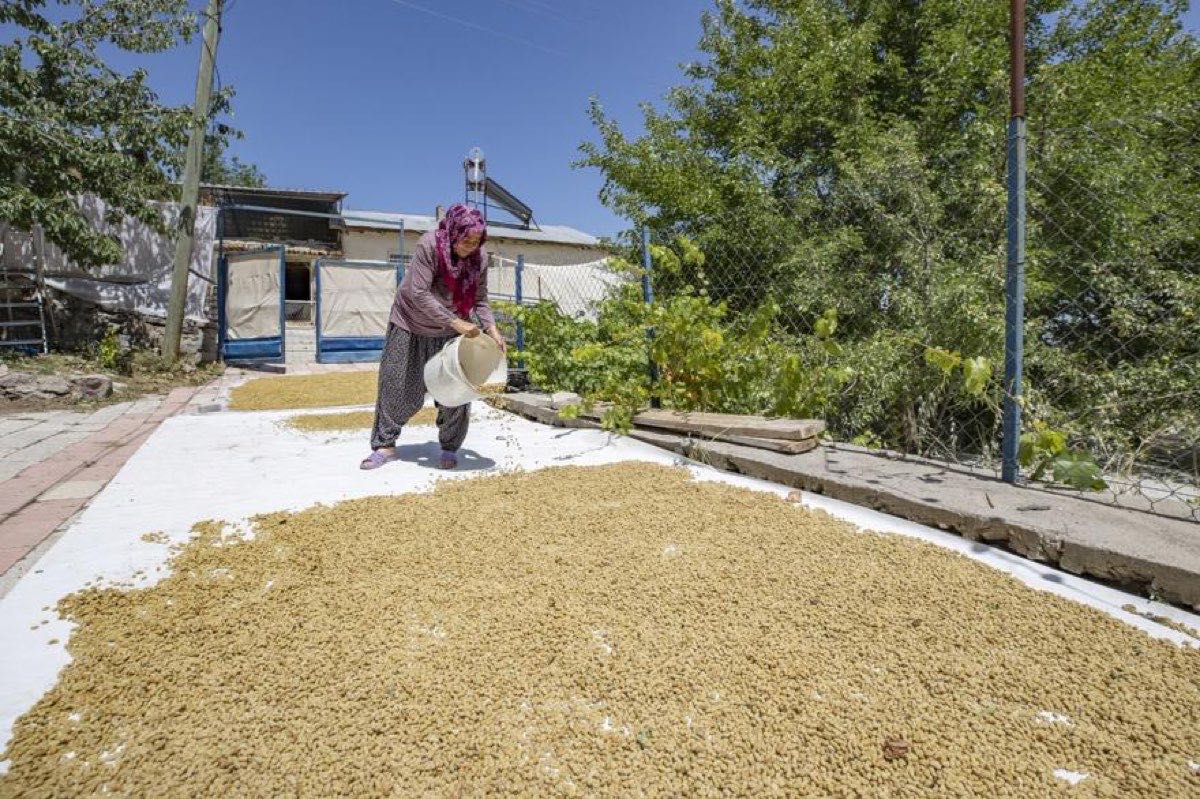
Spread on rooftops and terraces. Since a single drop of rain would darken it, sun is essential.

Step 4

Sieving & product

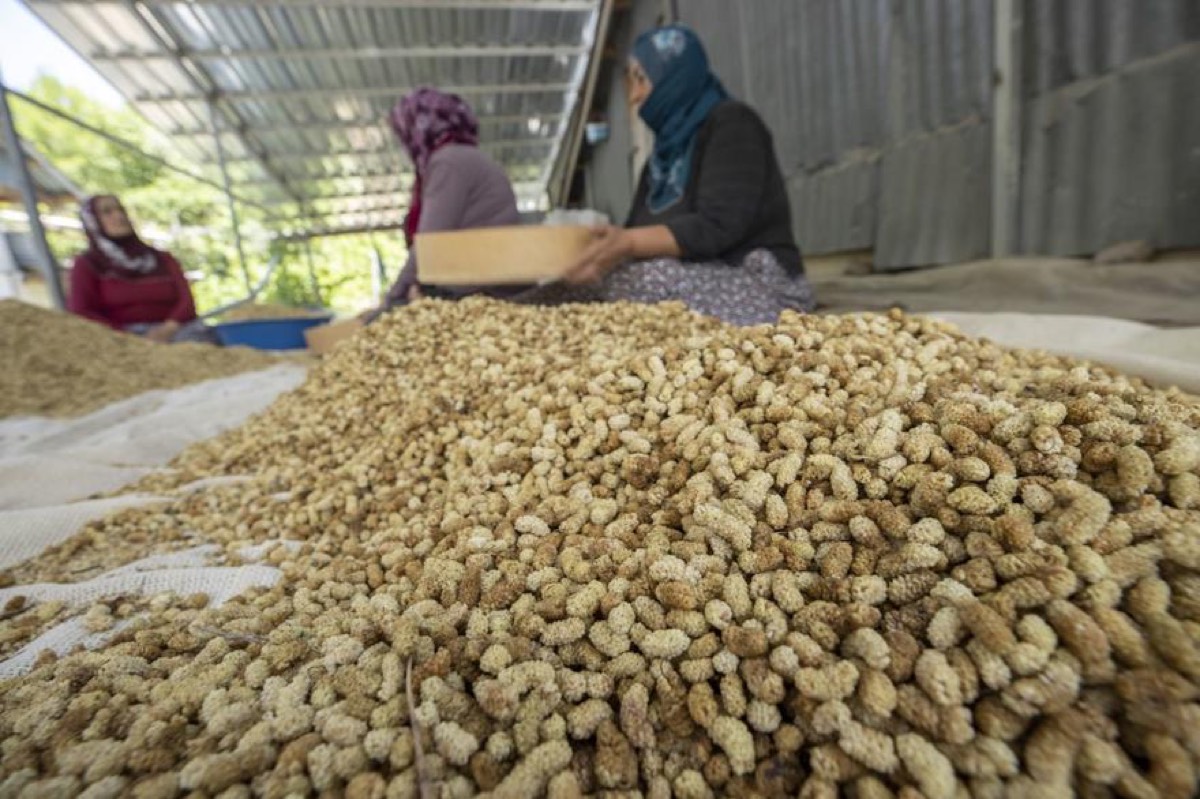
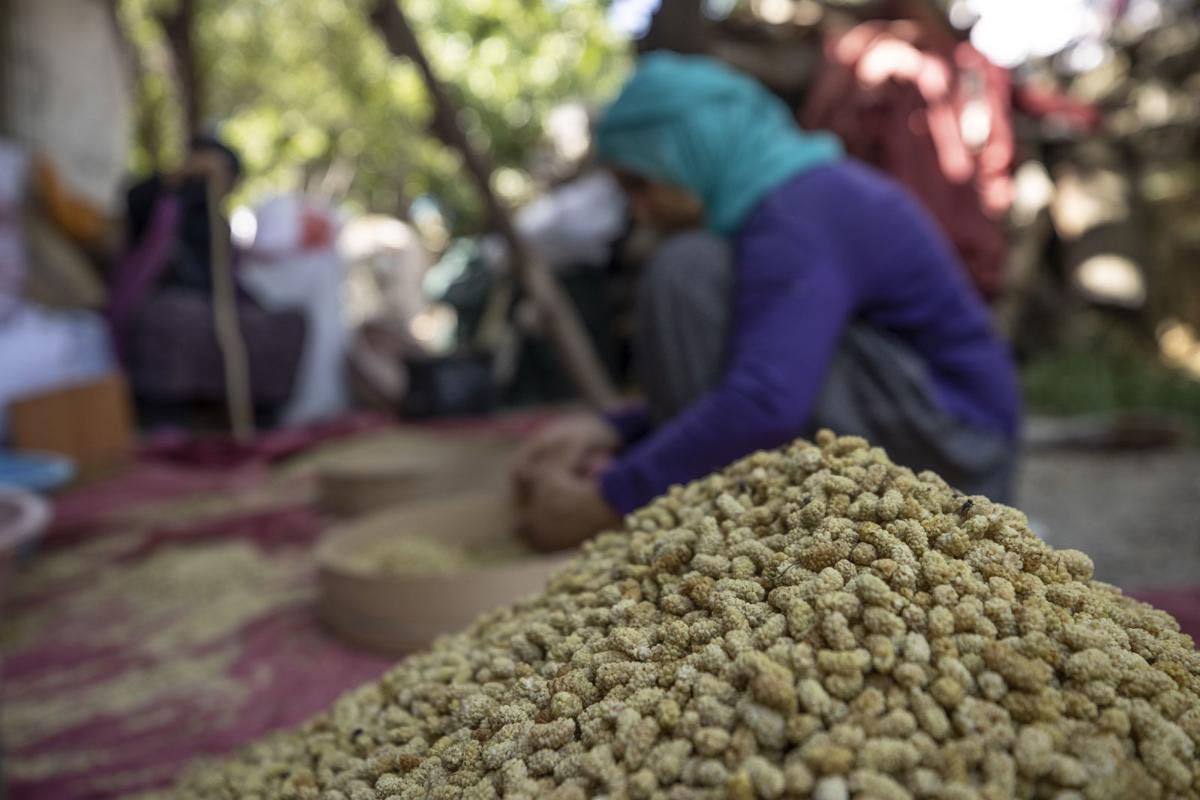
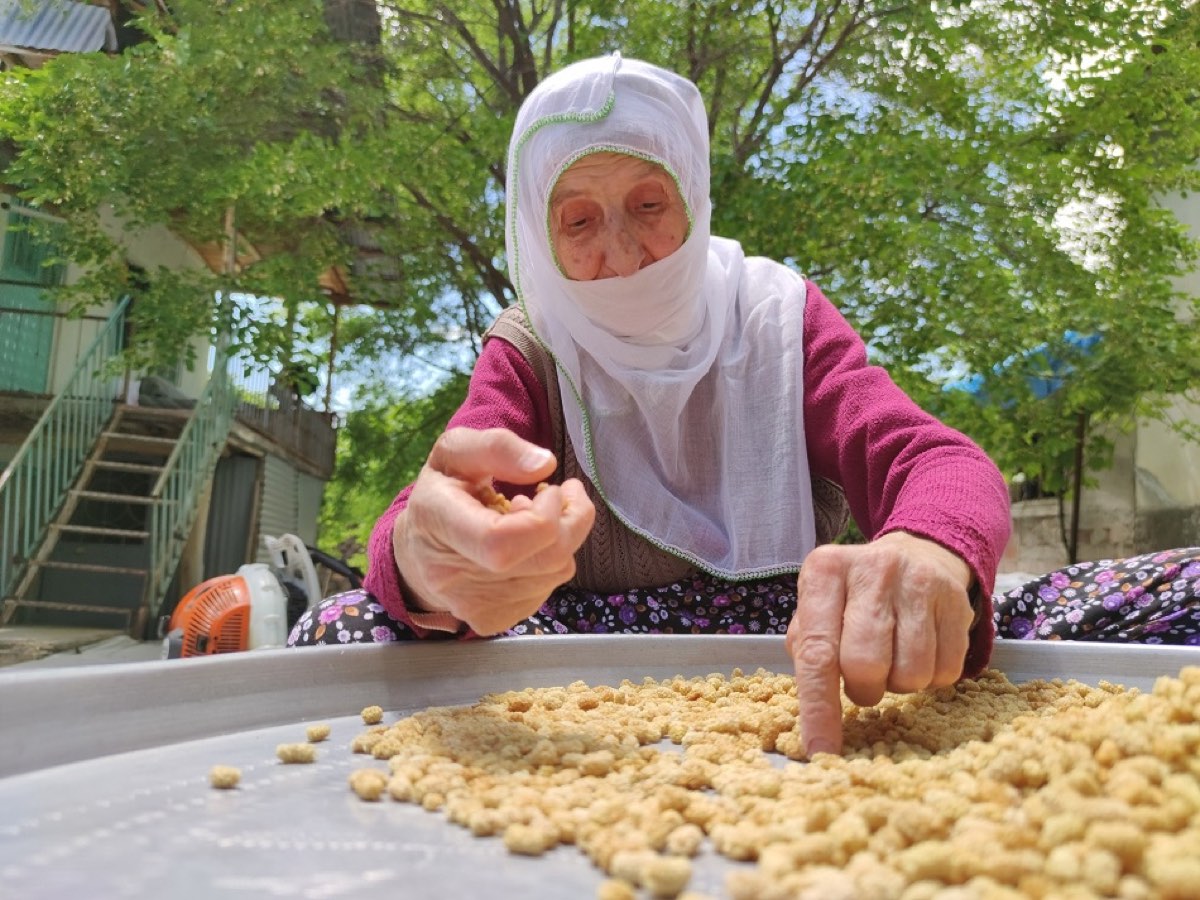
The sun-dried mulberries are sieved and cleaned, becoming snack mulberries, molasses (pekmez), orcik and pestil.

"In Anatolia, if a person's children and wife don't work, this job simply doesn't get done... Those who love their pocket and love their homeland will produce. A society that does not produce always loses."
— Bayram Aydın, headman (muhtar) of Ulukale (TRT Belgesel)
The Invisible Heroes

Women's labour and collective work

The harvest is a family-wide effort of mutual help (imece). Alongside machine gathering, the most labour-intensive tasks — sewing the tarpaulins together, spreading the mulberries, sieving and cleaning them under the sun — are carried out largely by women. The women of Ulukale are both the workers and the organisers of production.

"We have never stayed outside the economy; we don't think 'let our men work and we sit at home'... Consuming is easy, but producing is hard — that's why we try to be producers."
— A woman producer from Ulukale (İHA)
"We spread the nets under the trees and the mulberries begin to fall... We sieve the sun-dried mulberries, put them into sacks, and the traders come and buy our produce."
— Mine Şeker, producer (Ministry of Agriculture and Forestry publication)
From the Table to the World

Products and economy

Products

The Ulukale mulberry mainly yields first-grade snack (dried) mulberries, mulberry molasses (pekmez), orcik and pestil (fruit leather).

Production

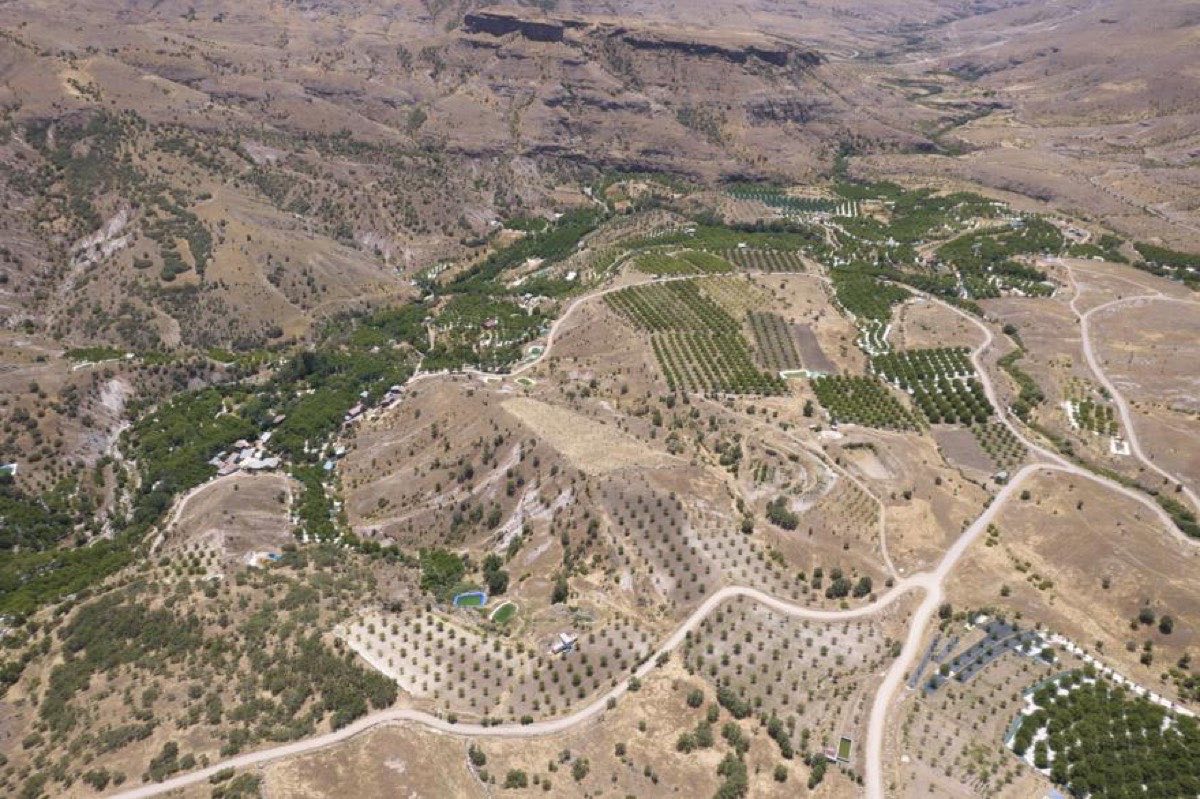
On roughly 1,500–2,000 decares in the villages of Ulukale and Bozağaç, an average of 400–500 tonnes is harvested in favourable years.

Livelihood

225 producer families make their living from this mulberry. It is the driving force of regional development and of staying in the village.

Export

Besides the domestic market, it is exported abroad — notably to Germany, Belgium, Luxembourg, Spain and the USA.

Geographical indication: The Ulukale mulberry is referred to in sources as a "geographically indicated" and "certified organic" product. As the registration year, number and issuing body are not stated in the sources, they are not given here; if you have verified registration details, please share them with us.
Health (village accounts): According to the villagers, the Ulukale mulberry — and especially its molasses — is said to be good for health, particularly for stomach ailments. This is not a medical claim but a tradition passed on by local people.
"We can call the Ulukale mulberry endemic, because when it is planted anywhere other than the valleys of these villages, it absolutely does not give the same product in aroma and colour."
— Necmettin Duman, cooperative chairman (Ministry of Agriculture and Forestry publication)

Sources: TRT Belgesel; İHA; Çemişgezek Municipality; Republic of Türkiye Ministry of Agriculture and Forestry publication; gazetedetay. The information on this page is based on the accounts of village producers and local sources.

Frames from the Harvest

Labour, sun and mulberry

From the orchards to the harvest, from drying to sieving — the village's mulberry season.
Photographs compiled from national press (NTV, Kanal 23, Bursa Hayat); the source is noted beneath each image. Copyright belongs to the respective sources; if a rights holder requests removal, please contact us and we will remove it promptly.

Do you have a photo from the mulberry harvest?

Spreading the nets, mulberries drying on the rooftops, the collective harvest... the photographs of this labour deserve to live in this archive.

Send a Photo / Memory